Nissan Owner's Portal
I defined core actions, got stakeholder buy-in, and along with two supporting designers,
delivered actionable insights and artefacts using various UX methods.
Client
NISSAN
Sector
Automobile
Timeframe
Jun 22 - Oct 22
Introduction
Nissan is a Japanese multinational automobile manufacturer headquartered in Nishi-ku, Yokohama, Japan. The company sells its vehicles under the Nissan and Infiniti brands.

With a revenue of $75 billion in 2022, Nissan was the 9th largest automobile maker in the world and the leading Japanese brand in China, Russia and Mexico.
Research
“Customer expectations are rapidly evolving. No longer satisfied with simply interacting with brands at the point of sale, customers are now seeking long-term relationships that offer a personalized, unique experience. They expect more than just a simple transactional exchange - they want to feel emotionally connected to the brand and receive a product in the context of a greater service.”
(CX research NISSAN 2020)
The above is an excerpt from a customer research report published by Nissan in 2020. The report emphasized the increasing importance of meeting customer expectations after product delivery to build long-term relationships with customers. Based on these valuable insights, Nissan made a strategic decision to prioritize efforts on enhancing the after-sales experience for vehicle owners.
After initial rounds of stakeholder interviews, we identified the Key Success Metric for this project as 'Increase in traffic and engagement in the Nissan Owner's Portal'
My role
I was the Lead UX Designer for this project and worked with two other designers and multiple stakeholders across 3 time zones.
I utilized strategy frameworks, defined core actions, got stakeholder buy-in and delivered actionable insights and artefacts using various UX tools and methodologies
Goals
Based on our initial analysis, key success metrics and stakeholder discussions, we successfully proposed and obtained buy-in for the following prioritized goals:

1. Enhanced signposting to facilitate feature exploration
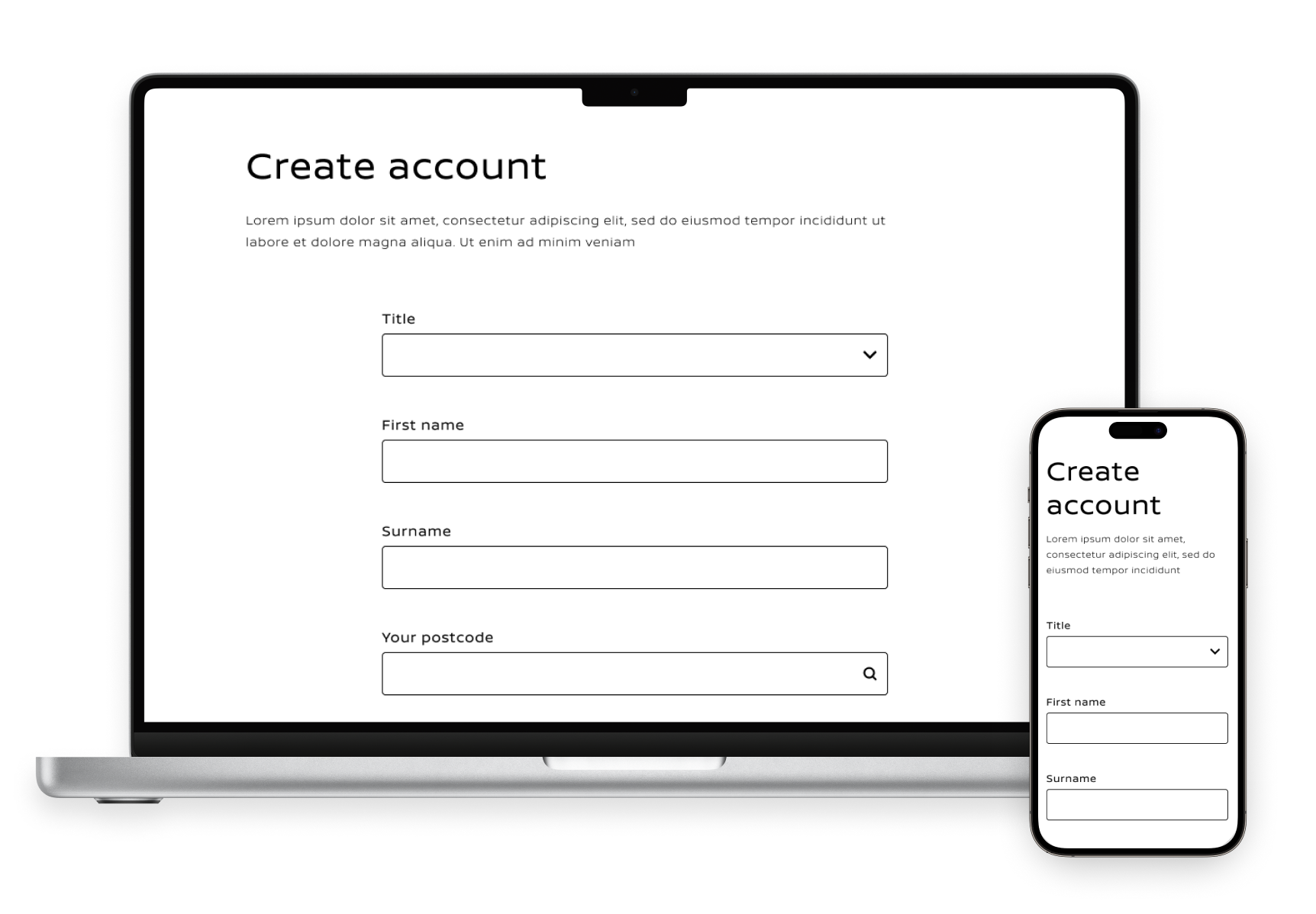
2. User-centric improvements to the sign-in and sign-up journeys
3. Ensuring visual consistency of the primary journeys with the new design system
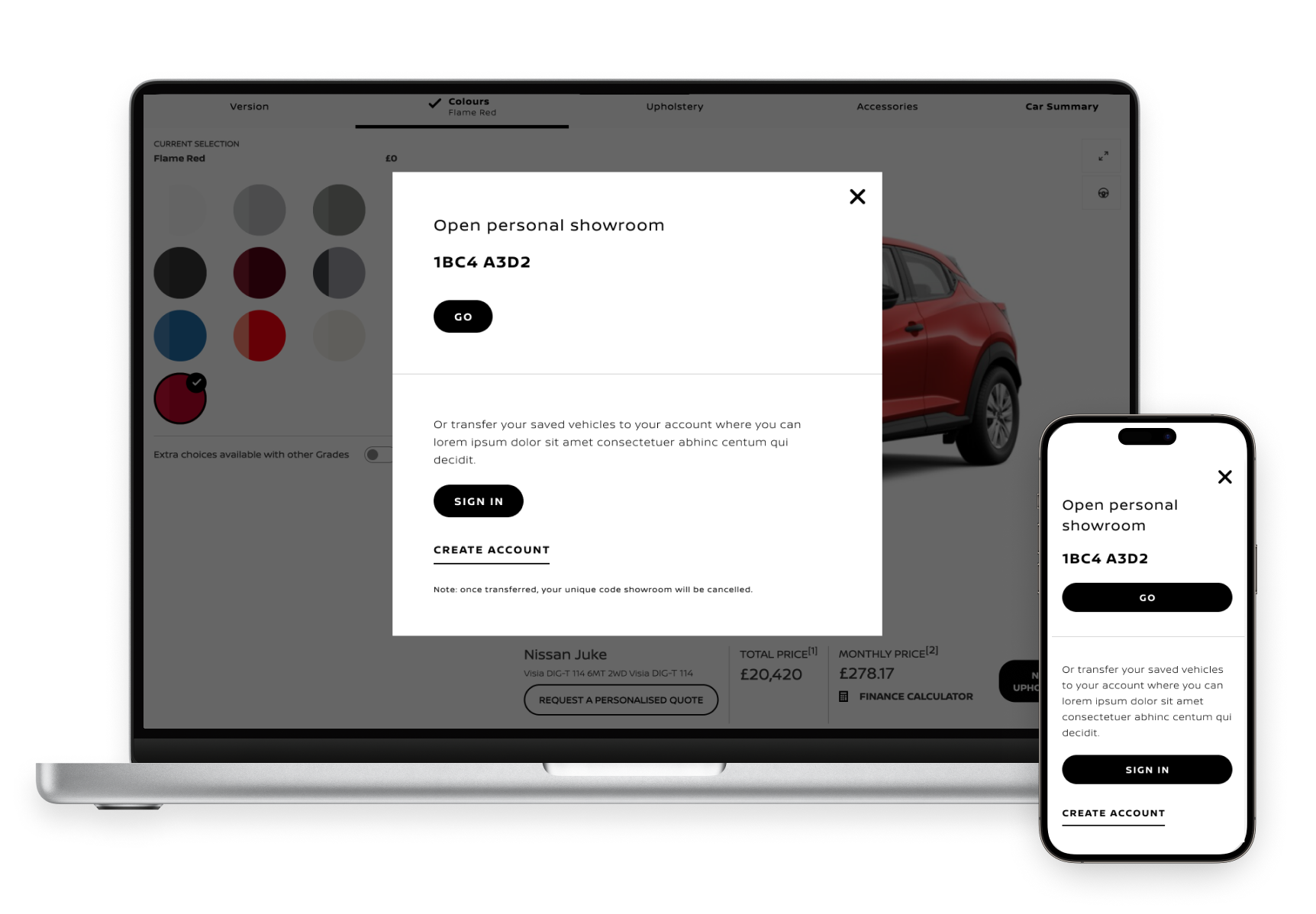
4. Streamlining user pathways with clear and concise modals
Challenges
There were two major challenges that we uncovered in our initial meetings

.1. The owner's portal did not have a consolidated single sign-in touchpoint and we identified many technical limitations

.2. As part of Nissan's ongoing migration to a new design system, certain sections of the website were still utilizing the Legacy system due to various factors that needed to be thoroughly understood before proposing any changes.
Approach
After multiple rounds of discussion with the Product owners, Business Analysts and Technical architects. We developed a fourfold approach for our Discovery and Definition phase

1. We would identify screens that are still in the Legacy design system as Quick Wins, where straightforward UI changes could be made for immediate improvements
2. We would perform a comprehensive competitive analysis to gain insights into the industry landscape.
3. We would conduct a complete UX audit of the existing Owner’s Portal
4. We would work continuously with the technical teams to explore technical limitations and develop Task flows
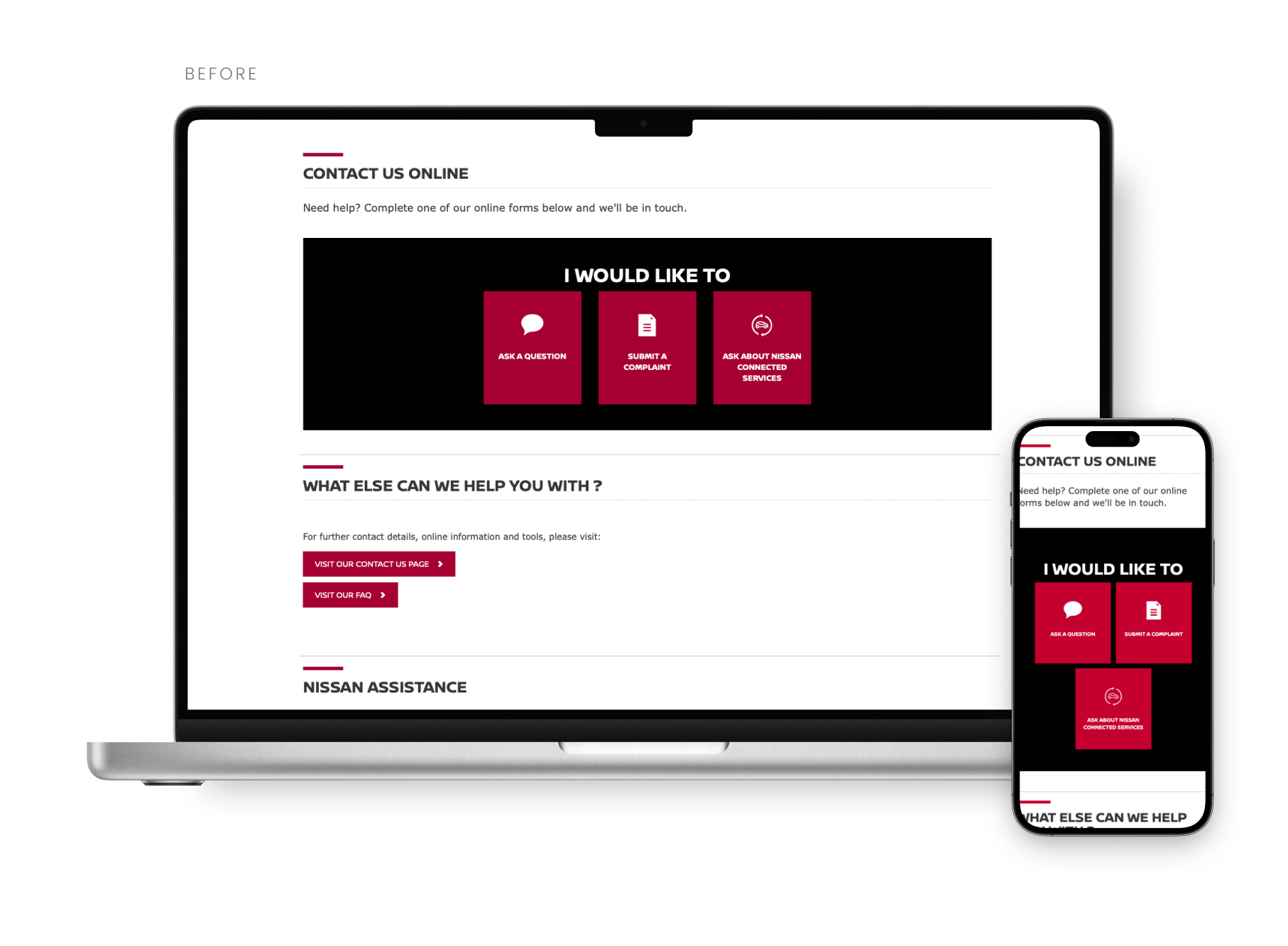
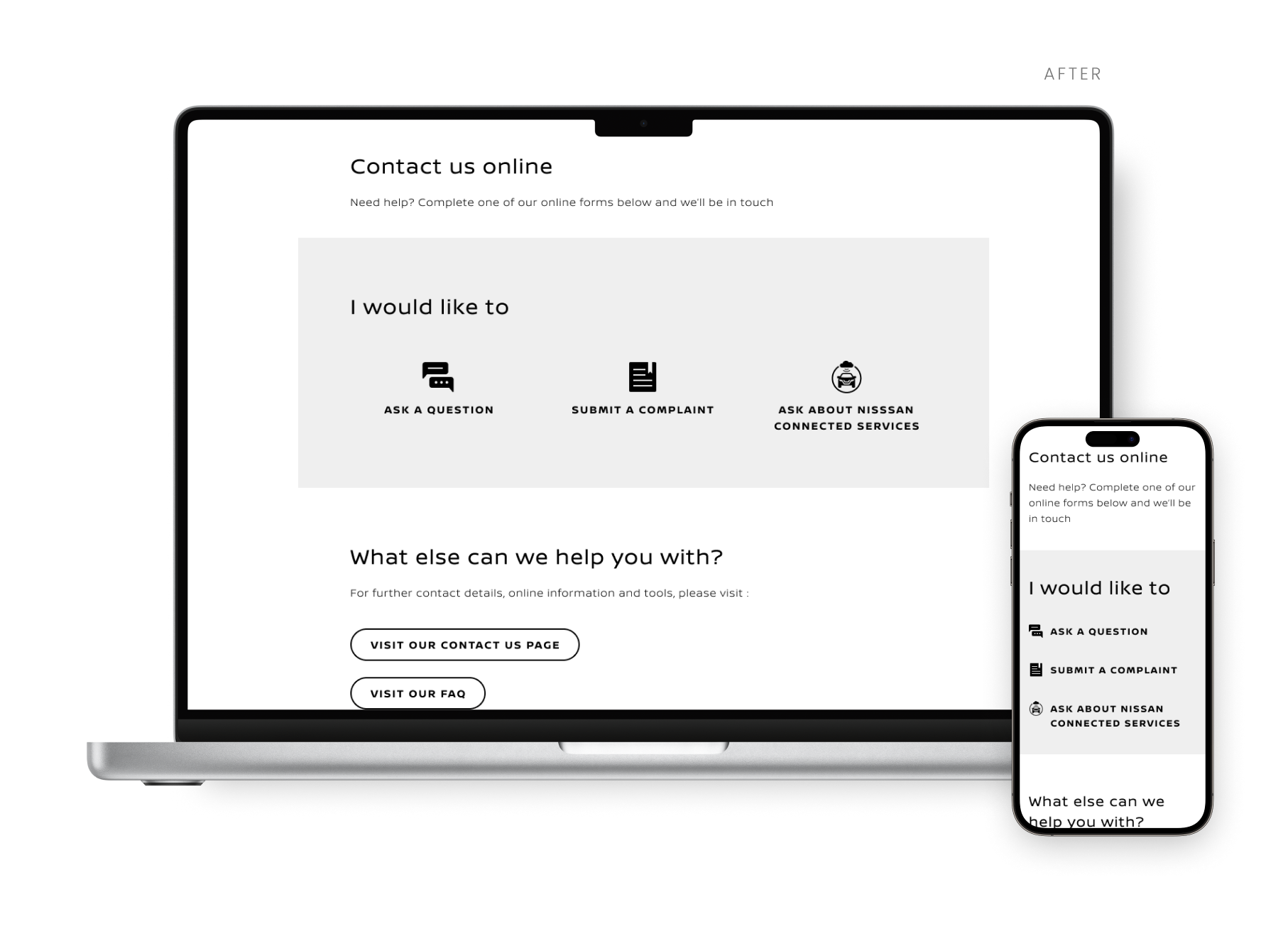
1. Quick wins
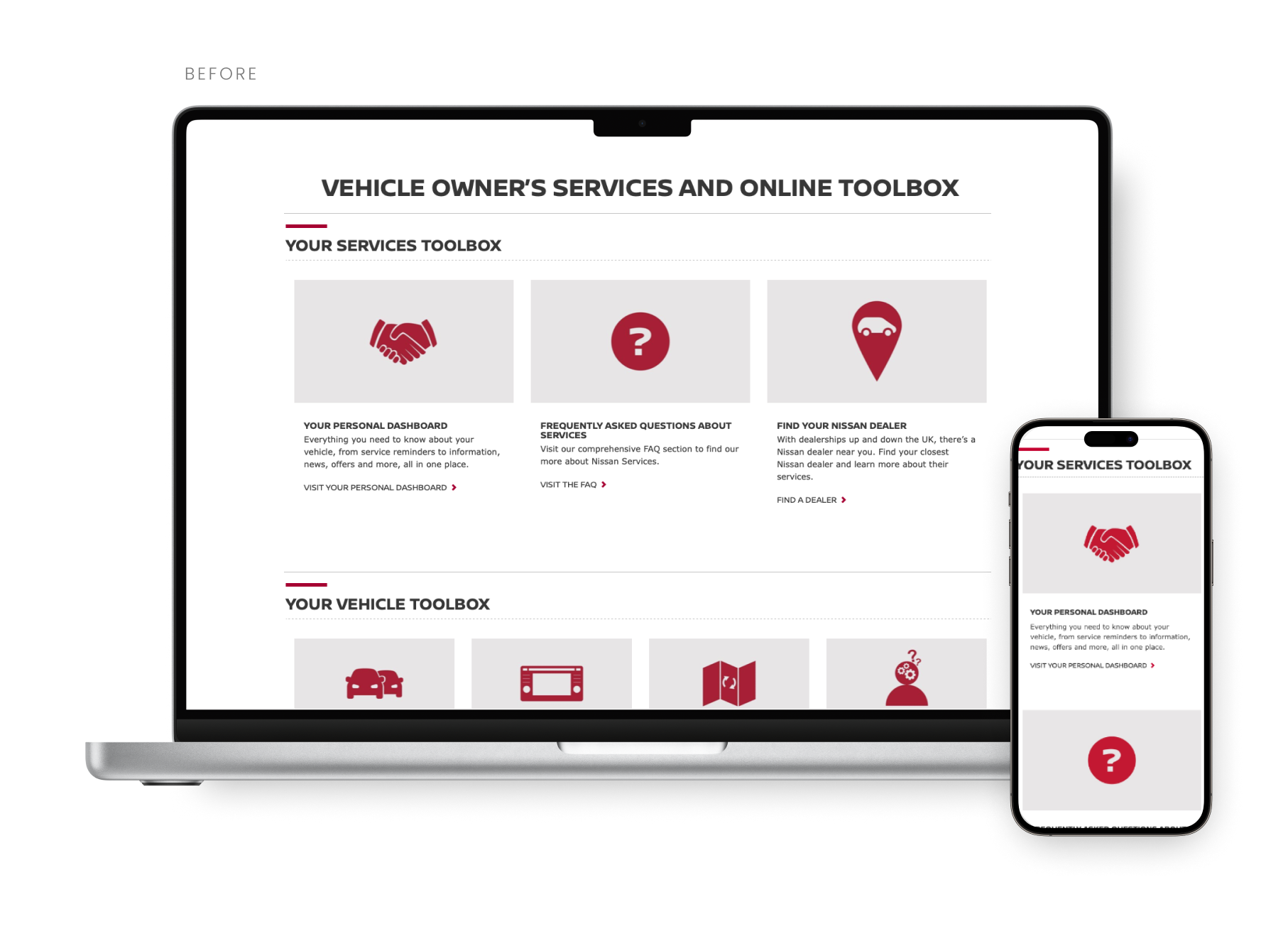
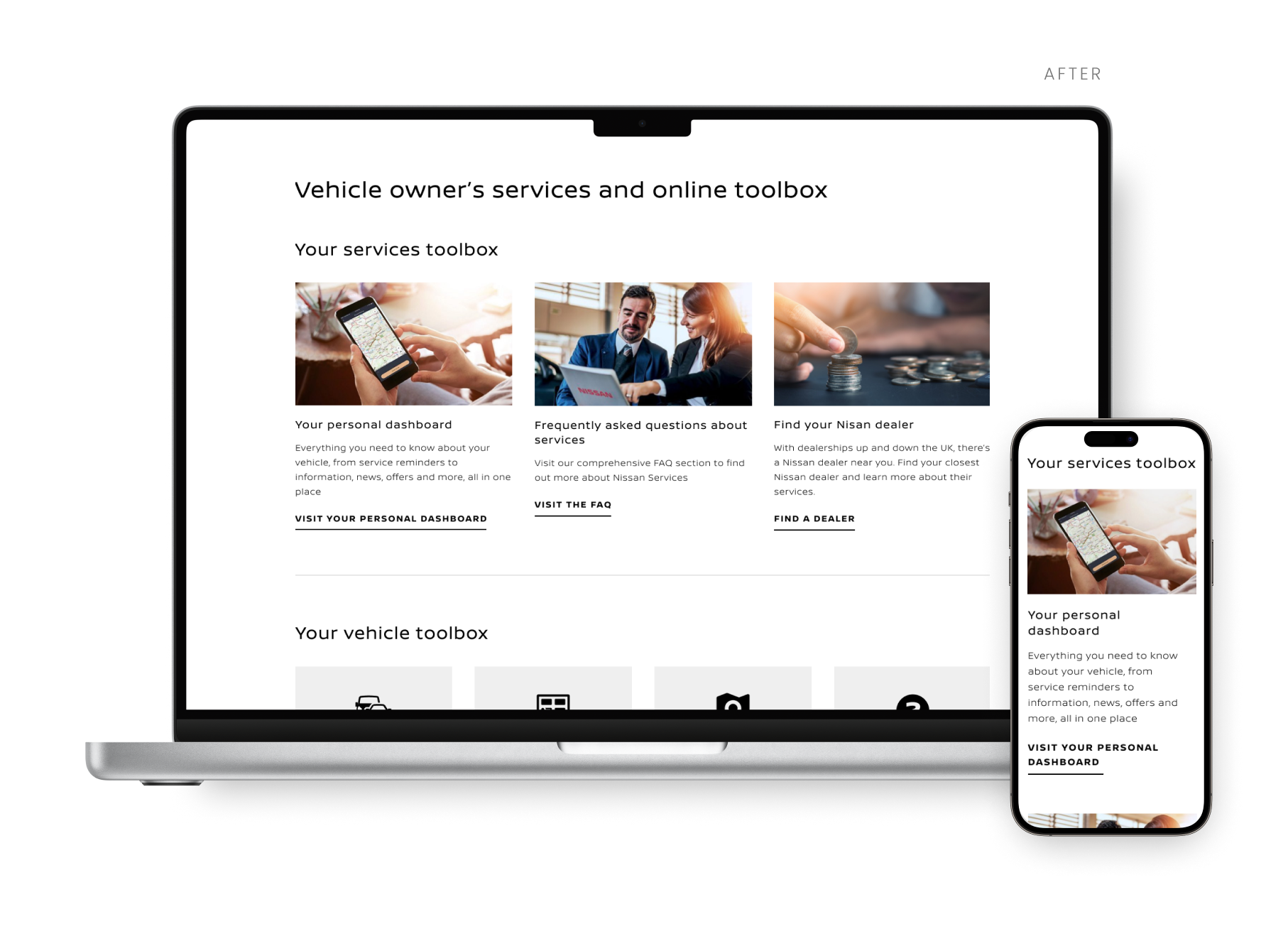
We identified a few screens that could easily be migrated to the new design system without adverse effects. It should be noted that at this point we did not recommended any usability changes.
Below are two examples of the changes implemented


(Use the slider to compare before and after screens)
2. Competitive analysis
As part of our design process, we recognized the importance of understanding the competitive landscape to develop a more effective design approach. To accomplish this, we conducted a thorough competitive analysis that involved examining the strengths and weaknesses of other companies in the automotive industry through the lens of ownership.
We were able to discover that many brands such as Renault and Mercedes Benz were already offering a consolidated after sales experience, while others such as BMW, Volvo and Volkswagen were in the process of integrating the experience.
These findings further validated the need for Nissan to implement a similar approach and create a more seamless and personalized ownership experience.
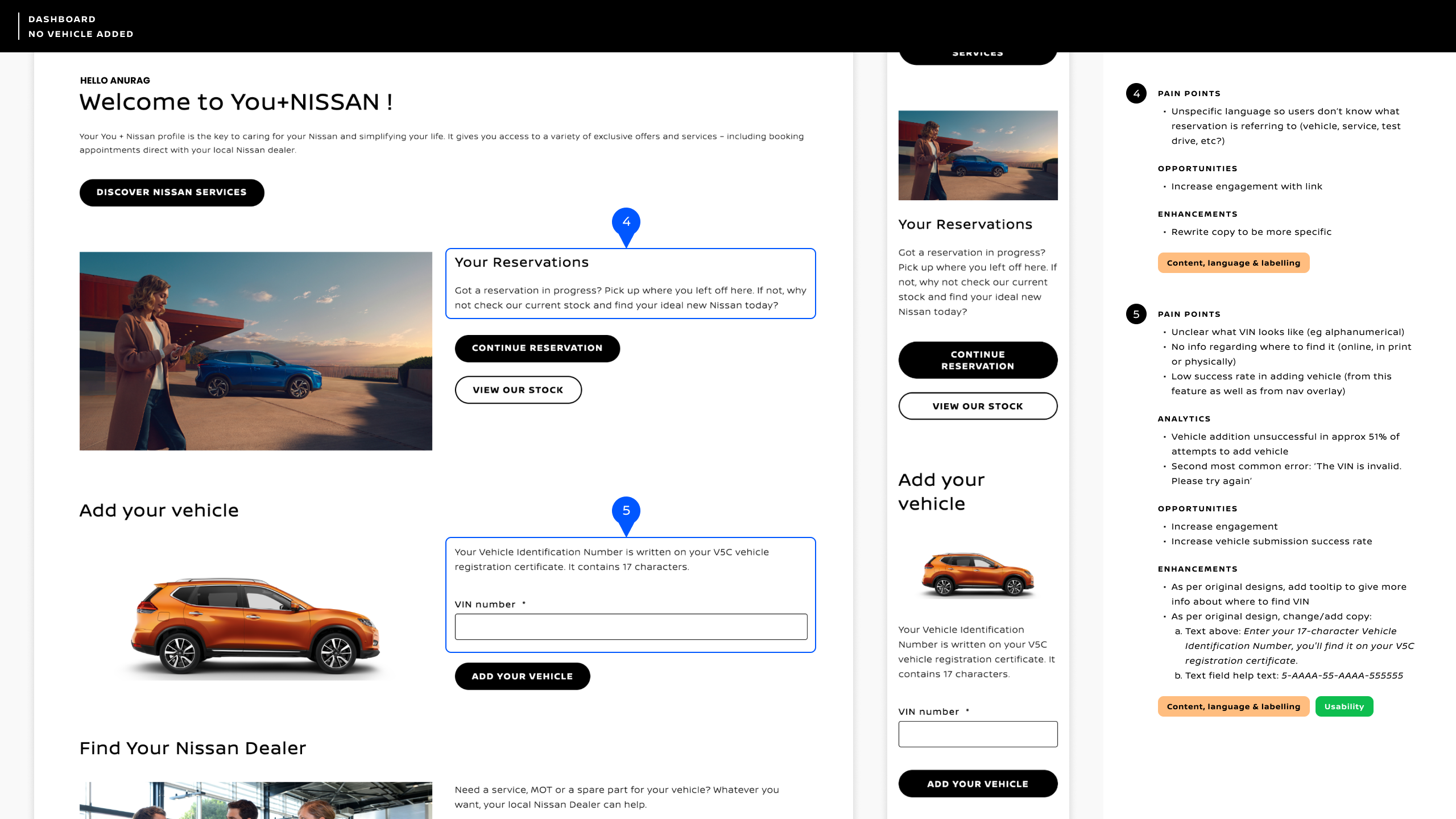
3. UX Audit
To gain a deeper understanding of the problem and identify areas for improvement, we conducted a UX audit of the owner’s portal. This was an extensive audit that we believed would have great bearing on this project.

To better understand the various pain points and suggest necessary enhancements, we planned to organize our findings into the following 8 distinct categories.
The UX audit enabled us to identify an astounding  65 problem areas across 8 categories, providing a comprehensive understanding of the issues that needed to be addressed to improve the Nissan ownership space.
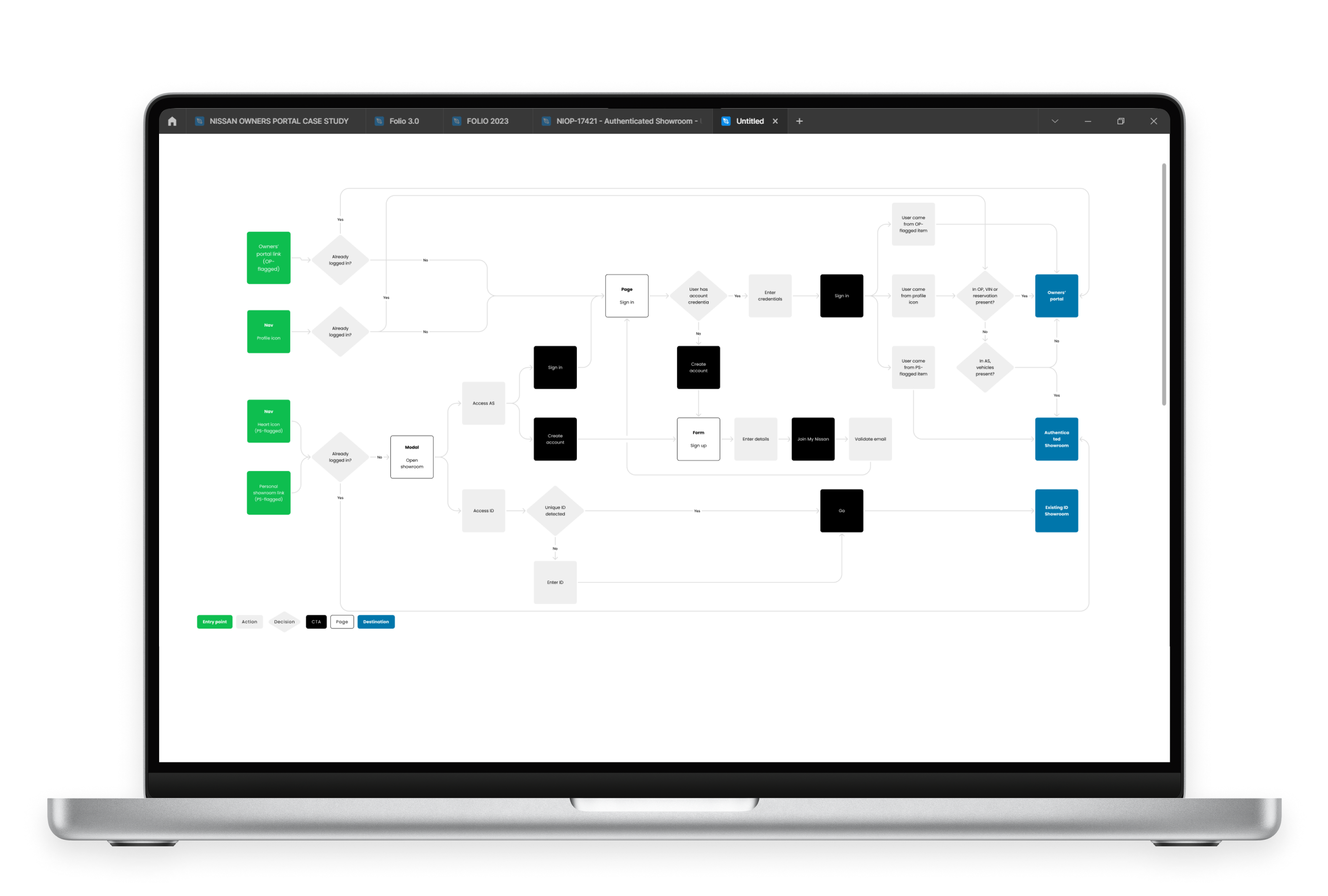
4. User + Task flows
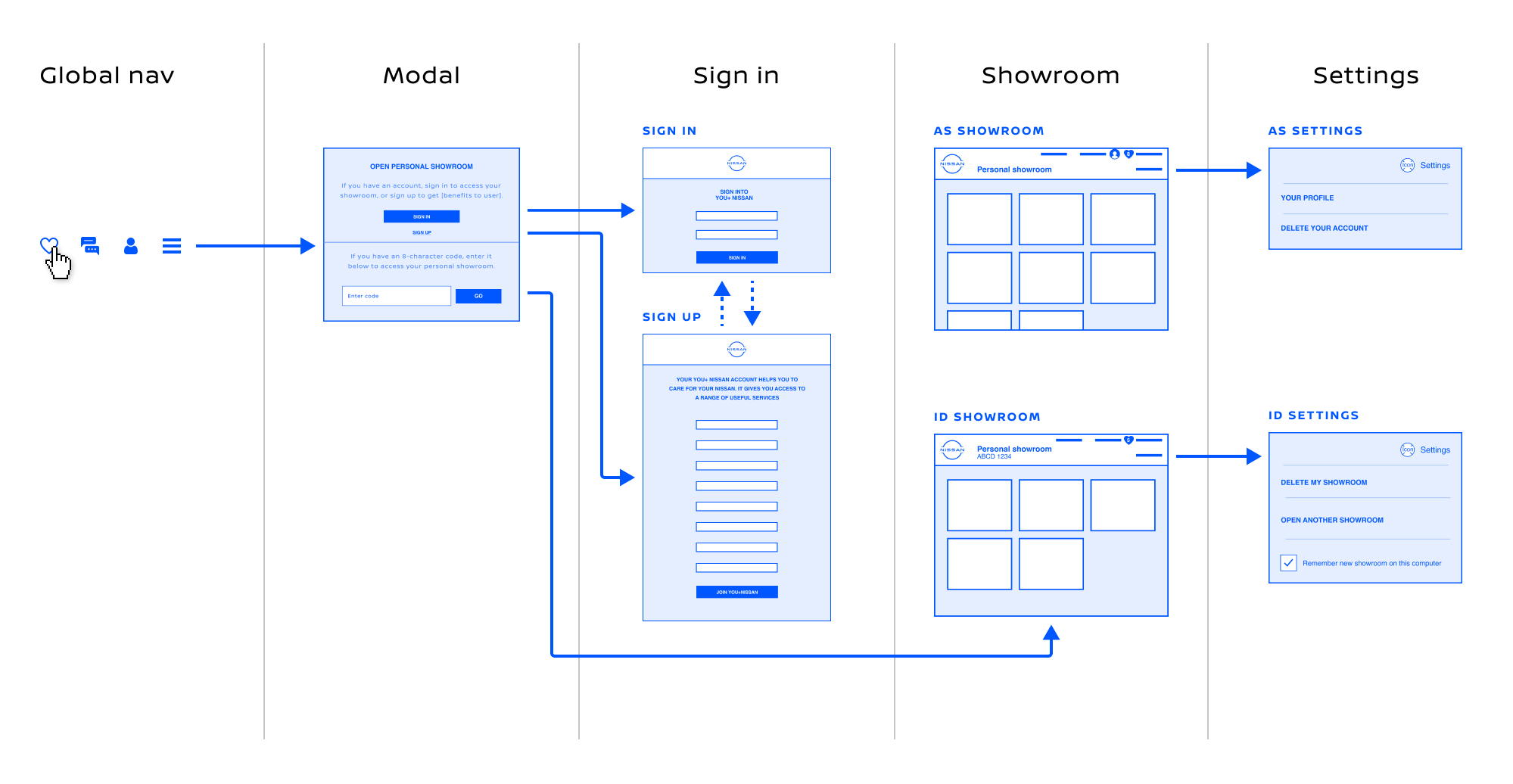
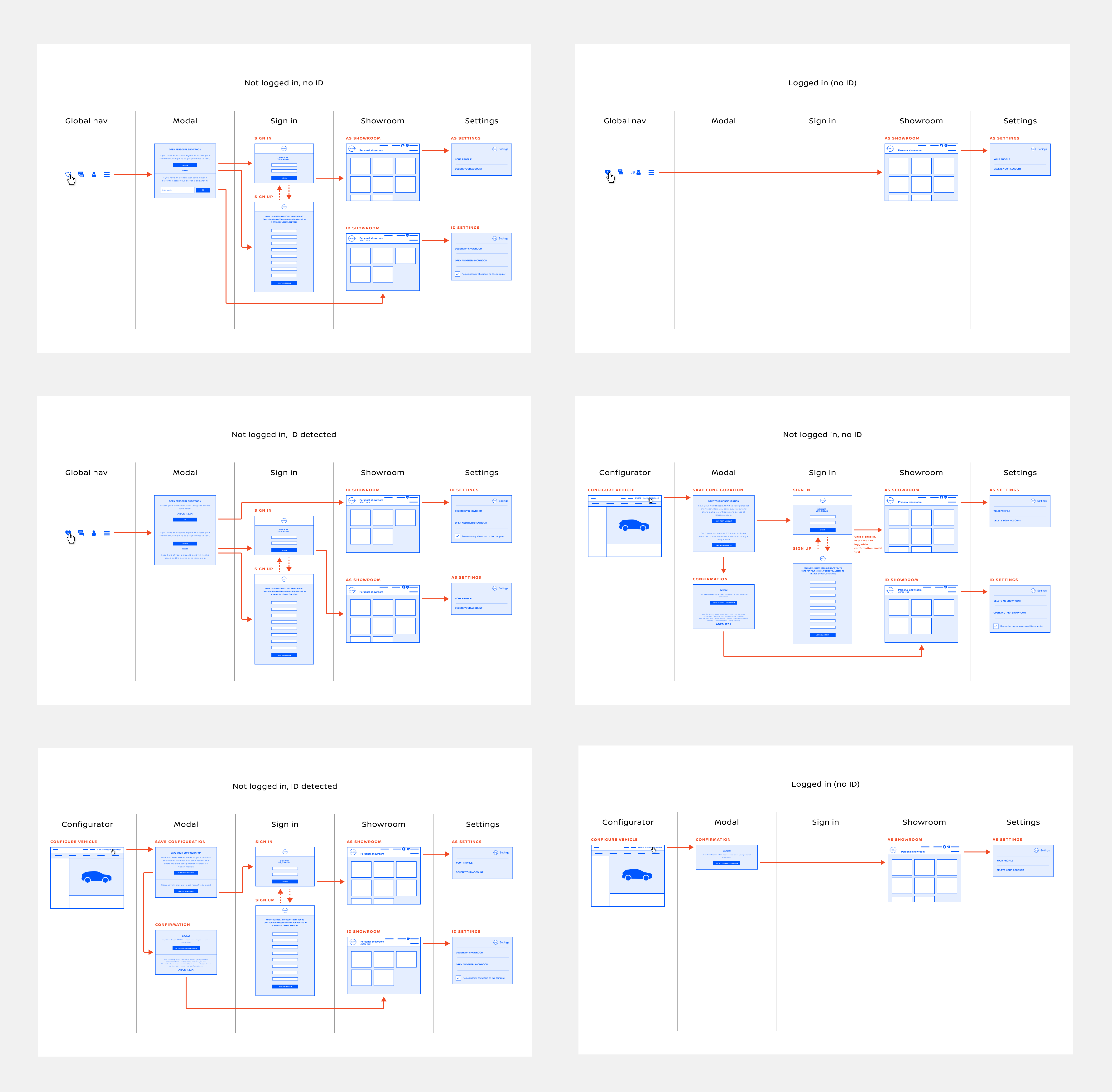
We mapped the existing user flows and working very closely with Technical teams, and created task flow diagrams of our recommended improvements. We then conducted high level Gap analysis between the two and prioritized our recommendations.
Task flows;
Wireframes
After a couple of meetings with the product owner, we started working on the prioritized flows.
We developed the wireframes using the insights from our Audit.
Visual Design
At Nissan, I was part of the WDS 2.0 Global Governance Team, therefore, I played an active part in the translation of the wireframes to UI screens.
I was particularly responsible in the design of the global navigation and signposting because of my familiarity with the WDS process.

This required a lot of leadership involvement because firstly, this proposal implied the introduction of new icon patterns and secondly, because we were making changes to the global navigation.


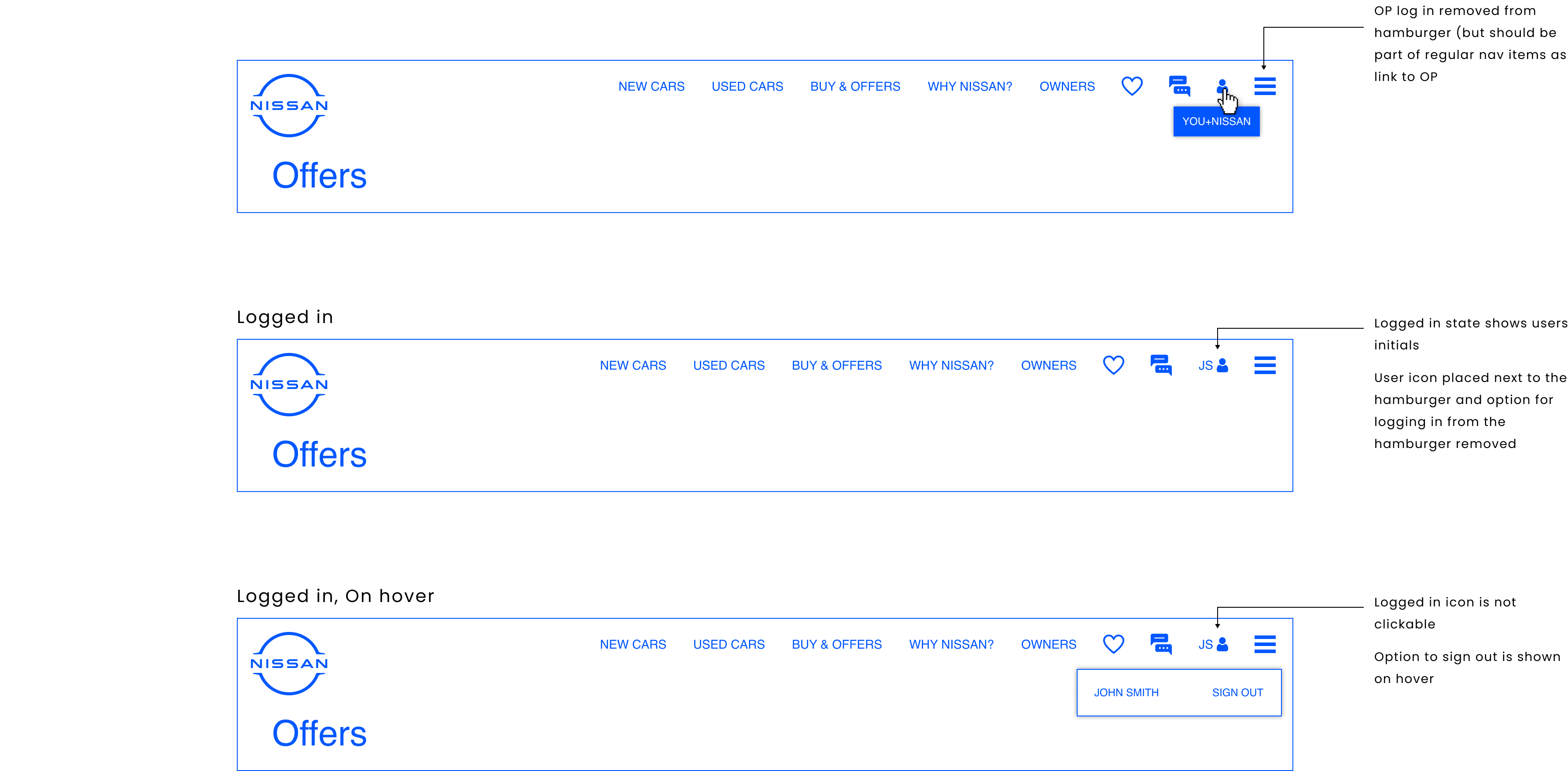
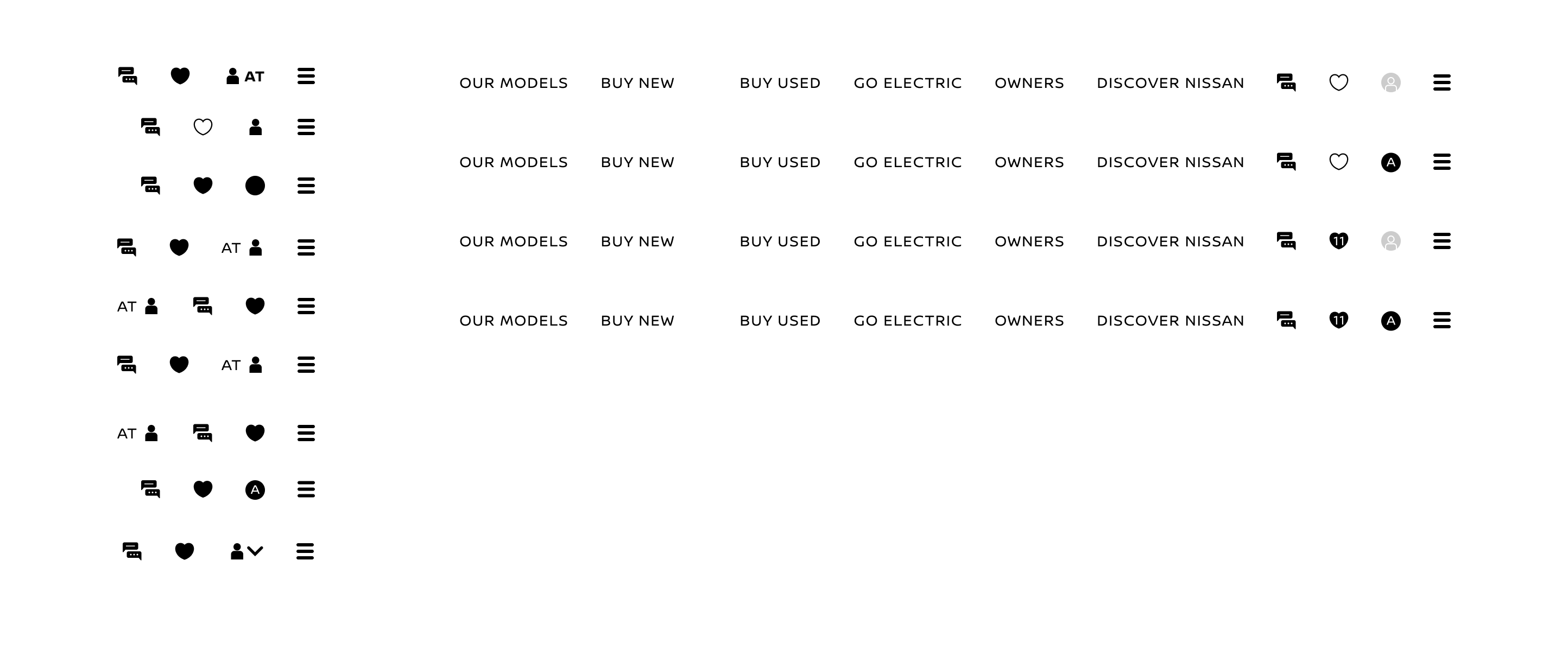
Initial explorations of the 'User' icon and logged in, logged out as well as other states;


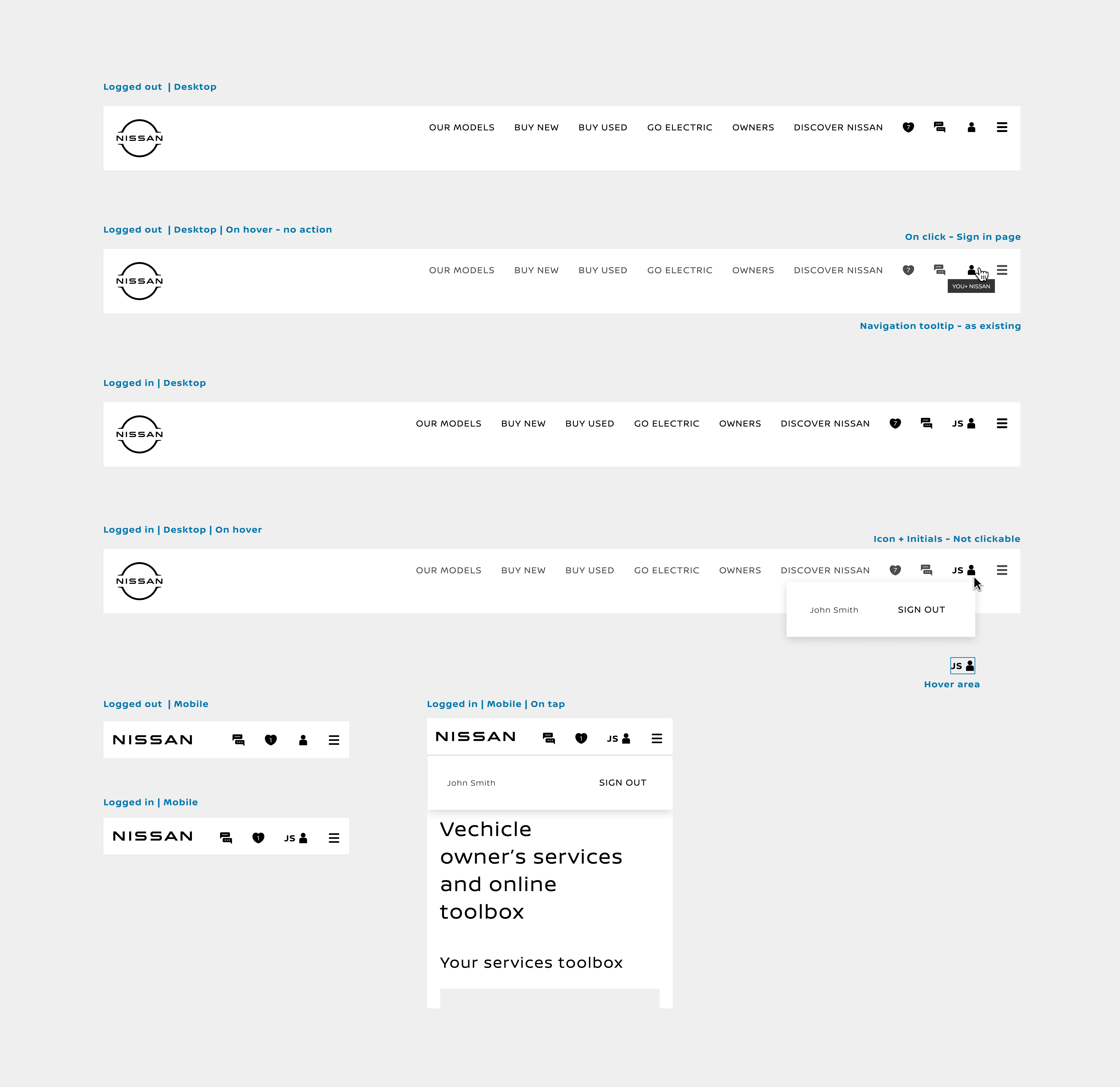
Final design and states of the global navigation user icon.
Visit nissan.co.uk to see it in action.
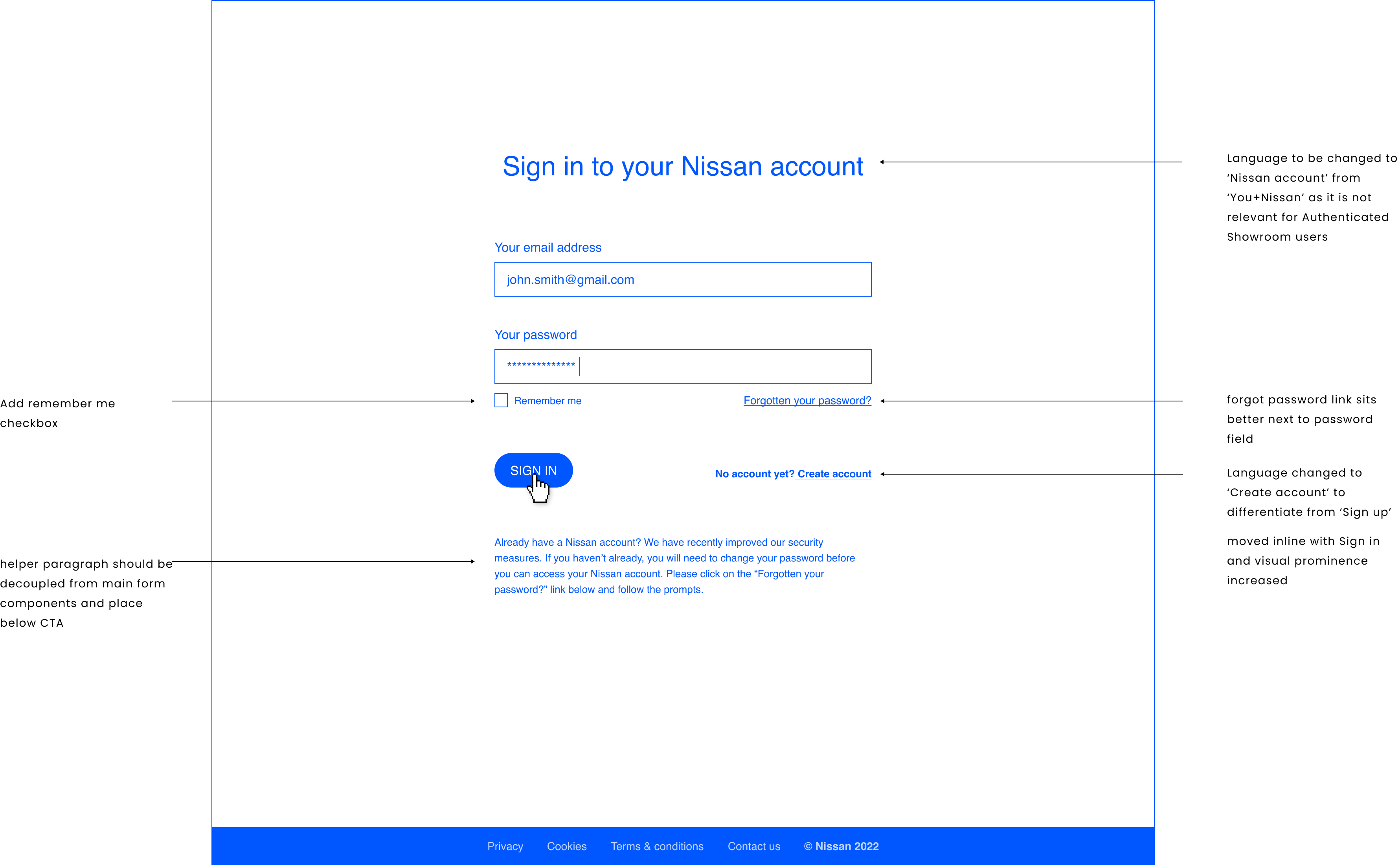
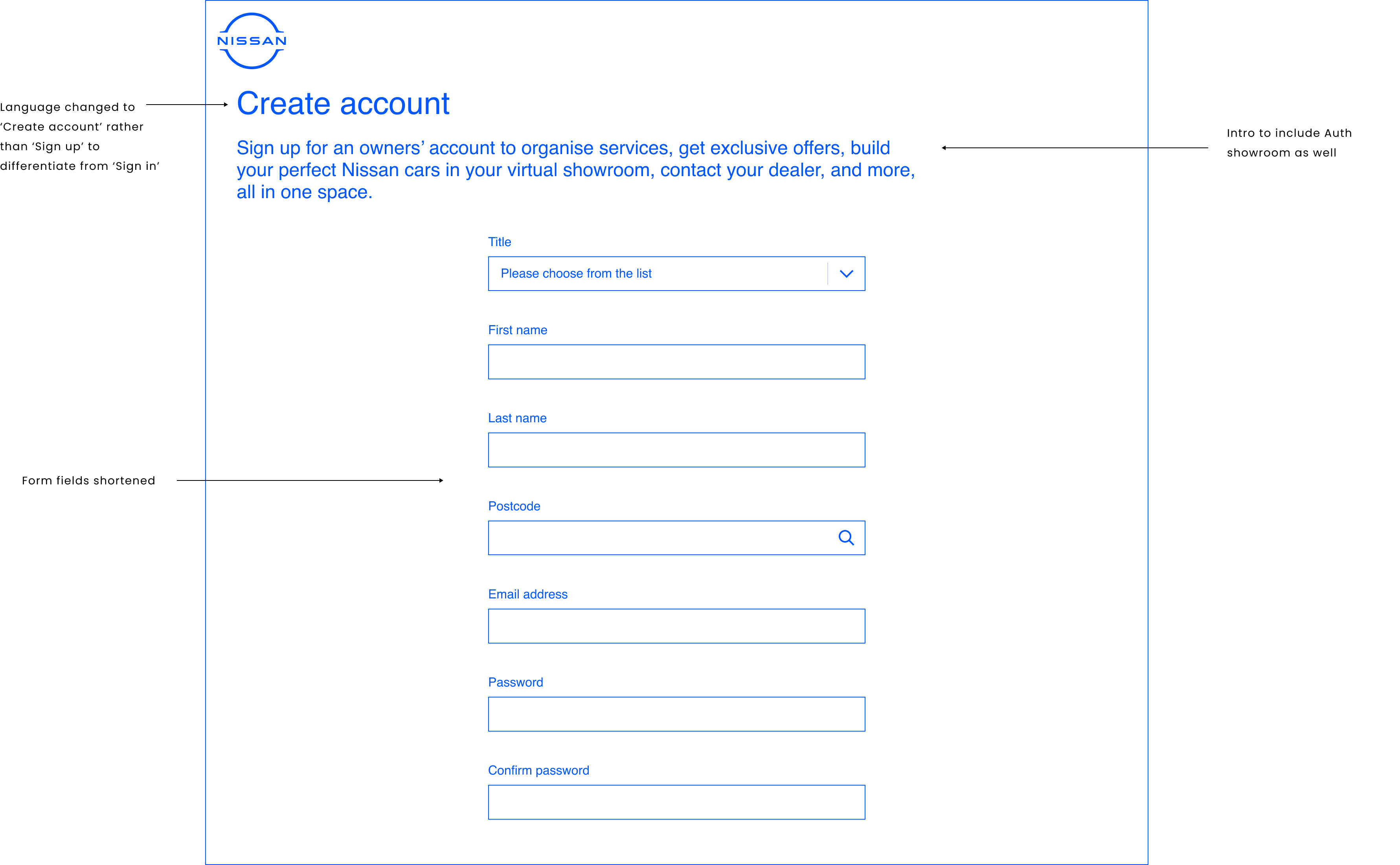
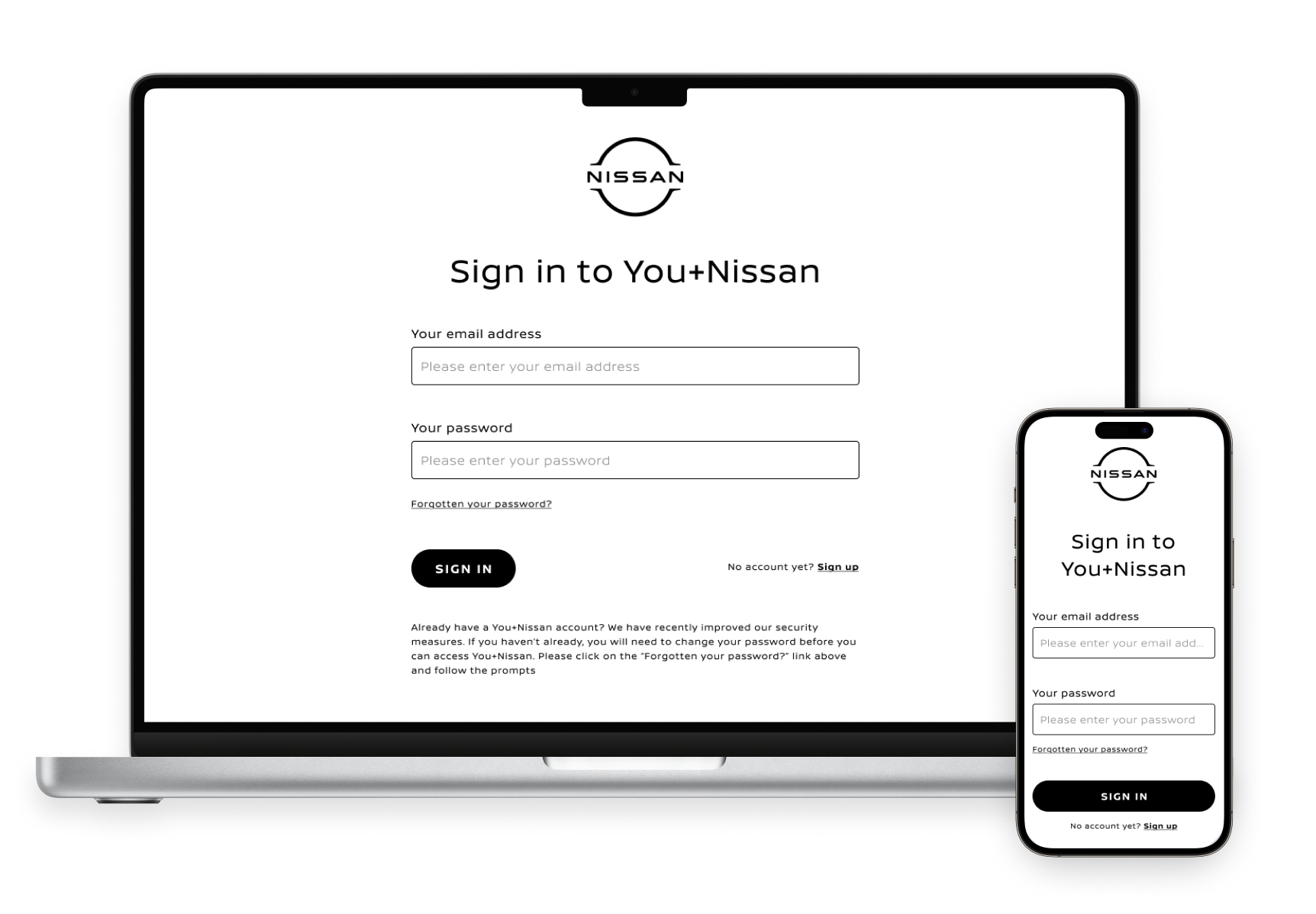
Other screens;
Outcomes
Although quantitative data is unavailable regarding the improvement in performance, the UX audit, wireframing, and UI screens for the ownership space were significant steps in the right direction.
The identified problem areas across 8 categories provided a clear roadmap for prioritizing and addressing the issues at hand.

The visual direction helped maintain a consistent design language for the new ownership space and the UI screens provided a blueprint for the development teams to follow.

While many features are still in the development phase, this exercise has given us a solid starting point for creating a more engaging ownership experience for Nissan's customers.

The improvements we have made to the owners portal, including better signposting and integration with the personal showroom space, will enable Nissan to provide a more seamless and engaging ownership experience for its customers.

By prioritizing the identified problem areas and incorporating user feedback, we are confident that we will be able to increase long-term customer satisfaction.

Disclaimer : All intellectual property showcased in this Case Study, including but not limited to designs, data, and research findings, are the property of Nissan 2022 and are reproduced here with permission. This Case Study is intended for educational purposes only and does not imply endorsement or partnership with any other entity.