Infiniti Web Components
I was the sole designer for this project and took complete custody of the Design process.
Client
Infiniti
Sector
Automobile
Timeframe
Feb 21 - May 21
Introduction
Infifiti is a luxury brand owned by NISSAN. When I first joined the NISSAN account in 2021, this was the first project assigned to me.

Infiniti websites was lagging behind NISSAN and needed to catchup with Nissan in terms of functionality in markets like USA, Mexico and Saudi Arabia.Therefore the markets decided to reskin some existing components from NISSAN with the Infiniti visual language.
My role
I was the sole designer for this project and took complete custody of the Design process.

I worked in extensive collaboration with a highly cross functional team consisting of the Product Owners, Technical Architects, Business Analysts, Project managers, Dev and QA teams.
Challenges
Constant reassessment of technical feasibility was one of the major challenges of this project. The technical team on this was also fairly new to the account and thus we had a lot of back and forth and a lot of design changes working through the components. In many instances the initial requirement was completely discarded halfway through the process because of technical constraints..
Process
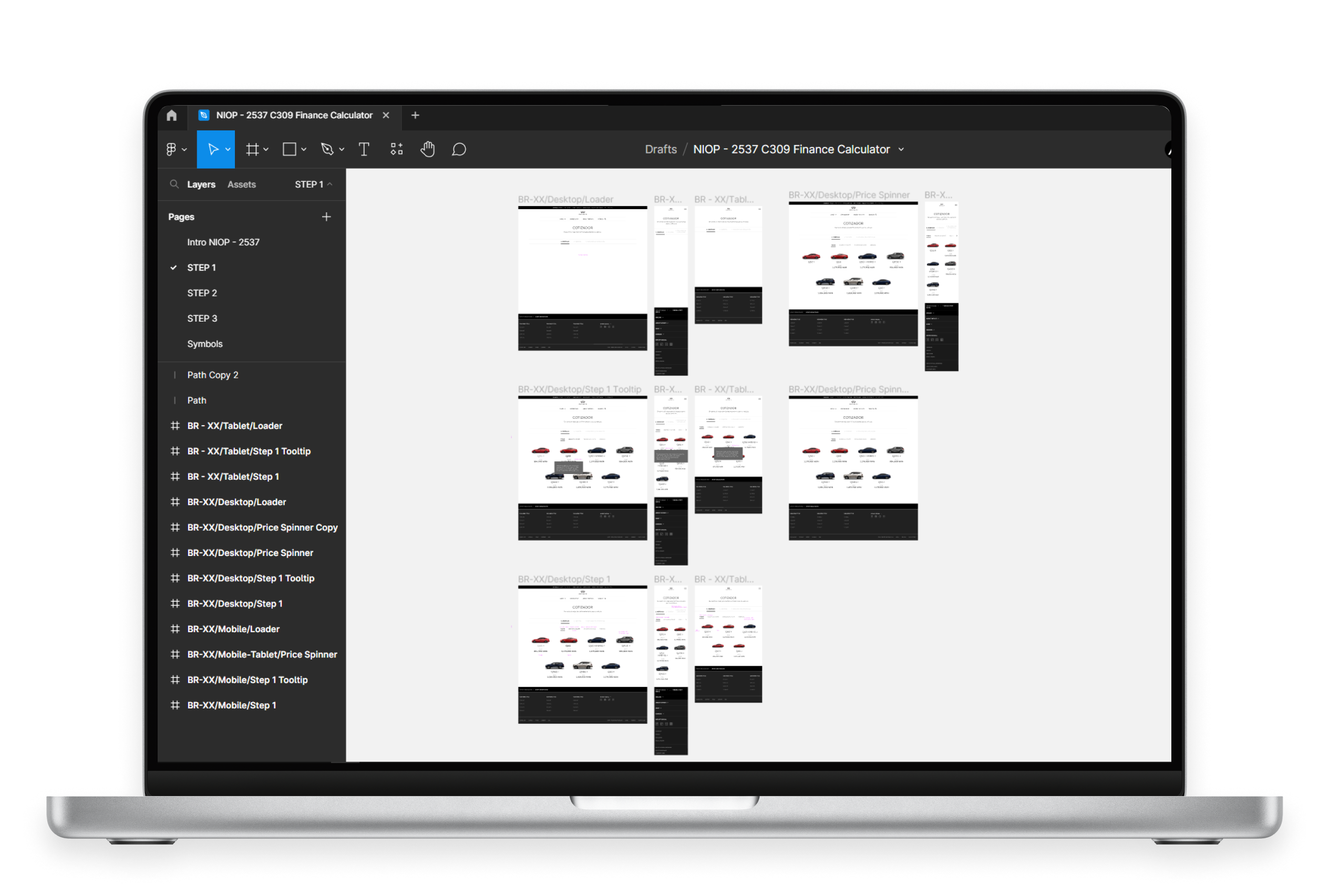
As the sole designer for this project, I had touchpoints with every other team and stakeholder. We followed an agile development approach and I used concepts of LEAN UX to drive design facilitation rather than focus on detailed specifications.
Feature prioritization
Touchpoints - Product owners + Business Analysts

I worked with the stakeholders to quickly mockup preliminary designs for components so that we could have clarity on the effort estimations and prioritize accordingly.
Data gathering
Touchpoints - TAs + QA Leads

An in-depth understanding of the components was absolutely necessary to design for all use cases and scenarios. I gathered all available Nissan documentation and worked with the TA and QA leads to find out all possible authoring scenarios.

The components were authored using Adobe Experience Manager (AEM).
Realizing that this was taking too much time from the stakeholders, I took up a short course in the AEM tool and after the first few components, I used the tool independently to assess all authoring scenarios.
Design Iterations
Touchpoints - Product Owners + Agencies + TAs + BAs

I then worked very closely with the Product Owners as well as representatives of Critical Mass, (Another agency which was working with Infiniti at that time). We went through a very iterative process and I worked on consistent feedback from the stakeholders to produce designs.
Visual Designs
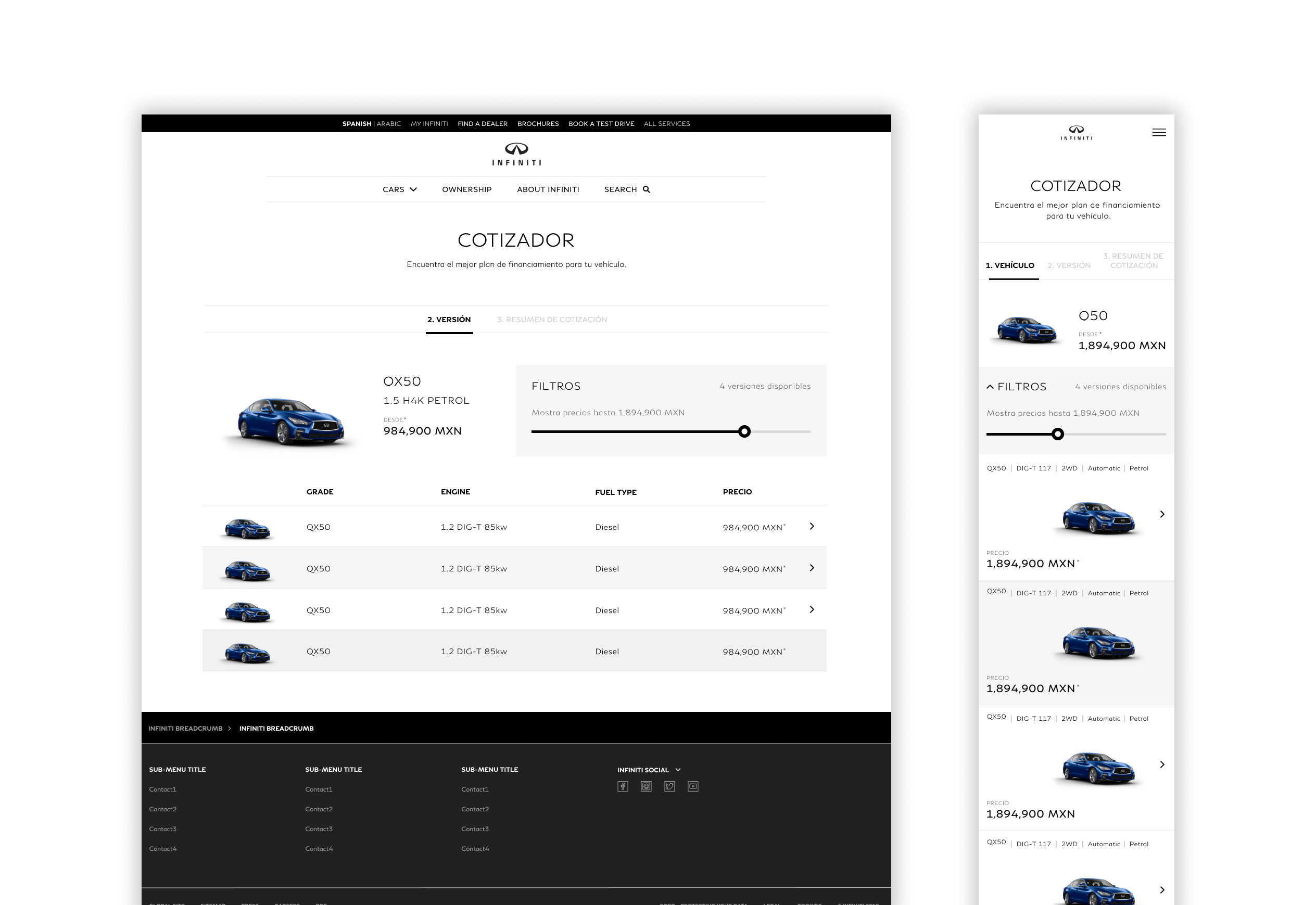
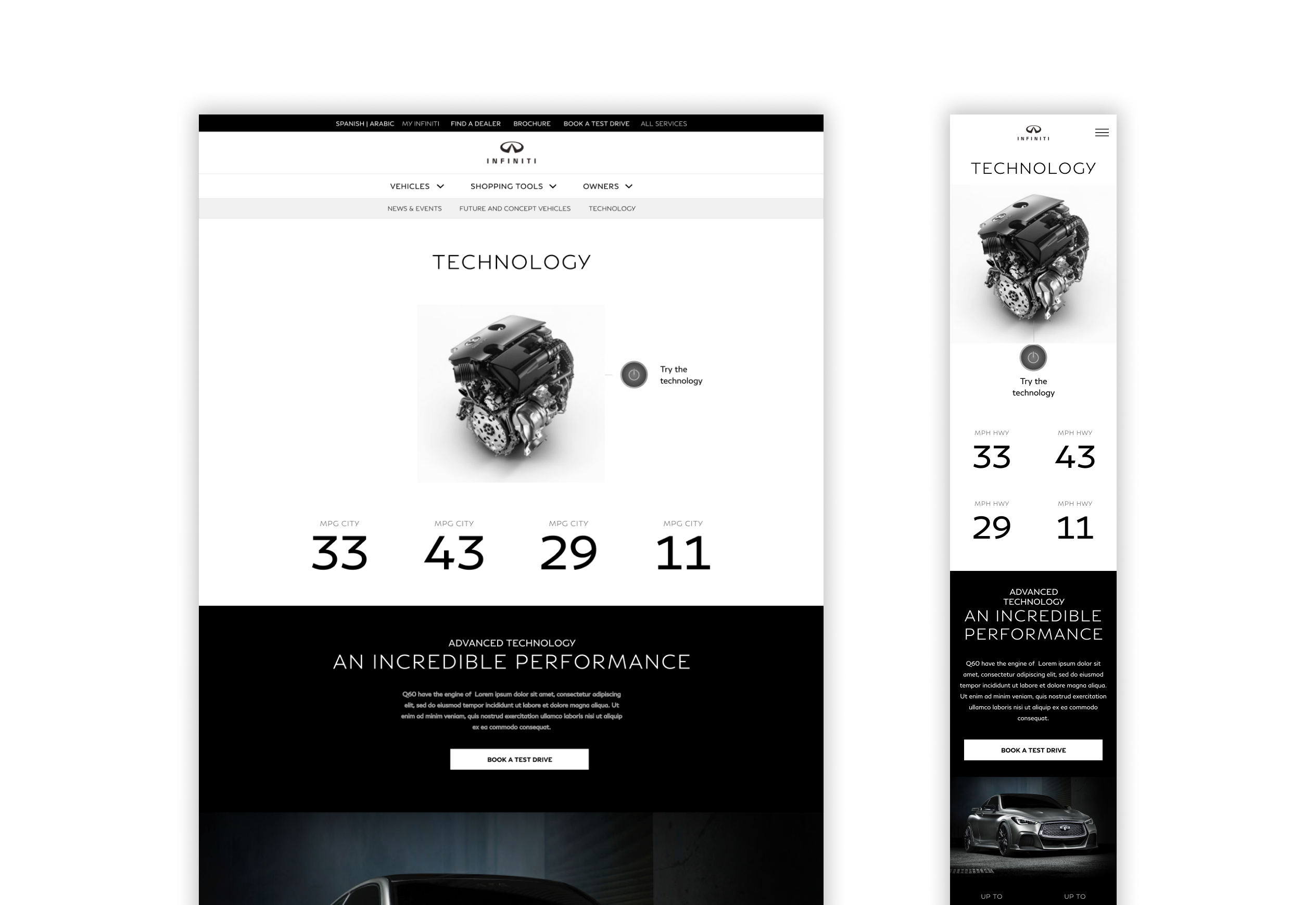
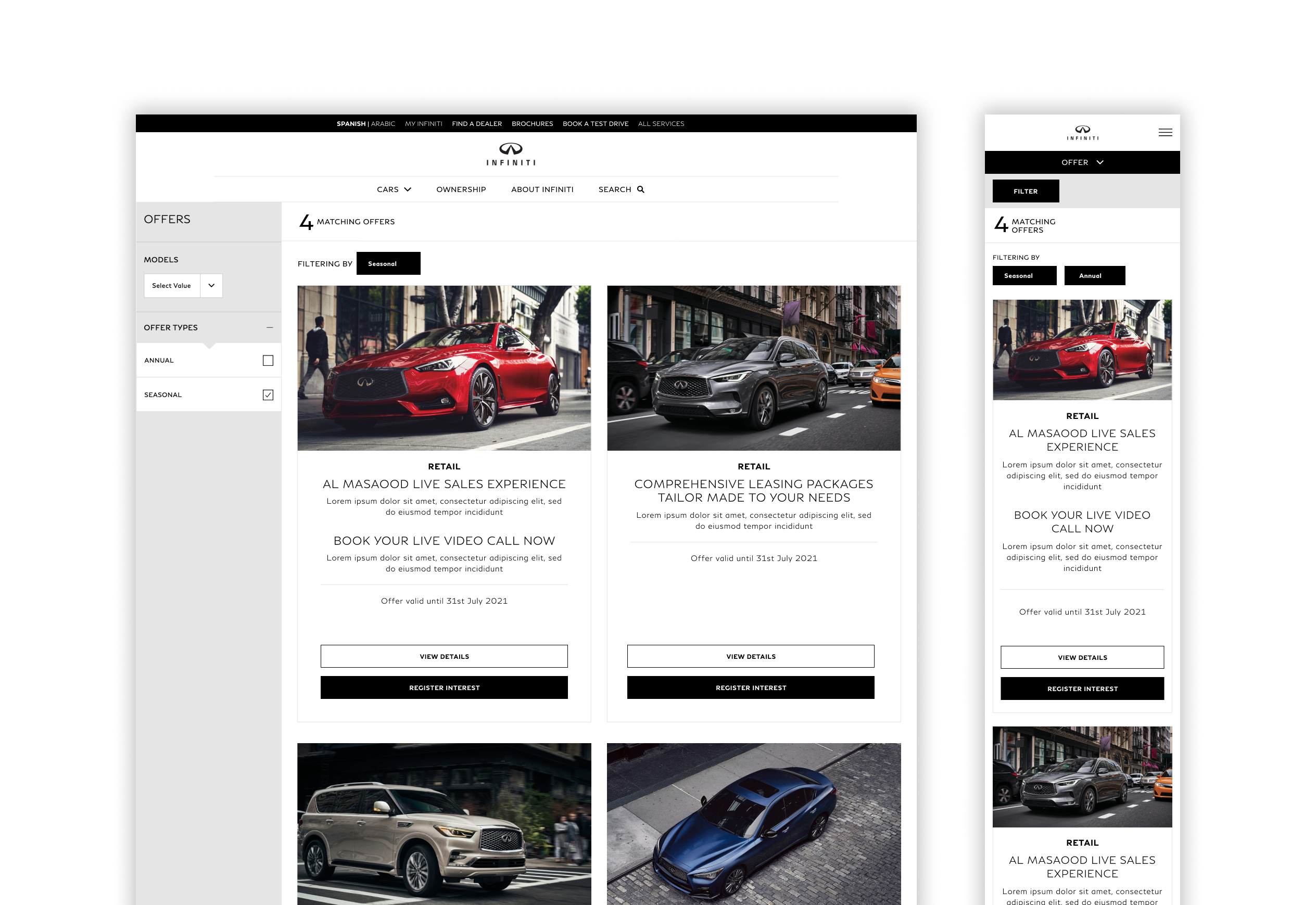
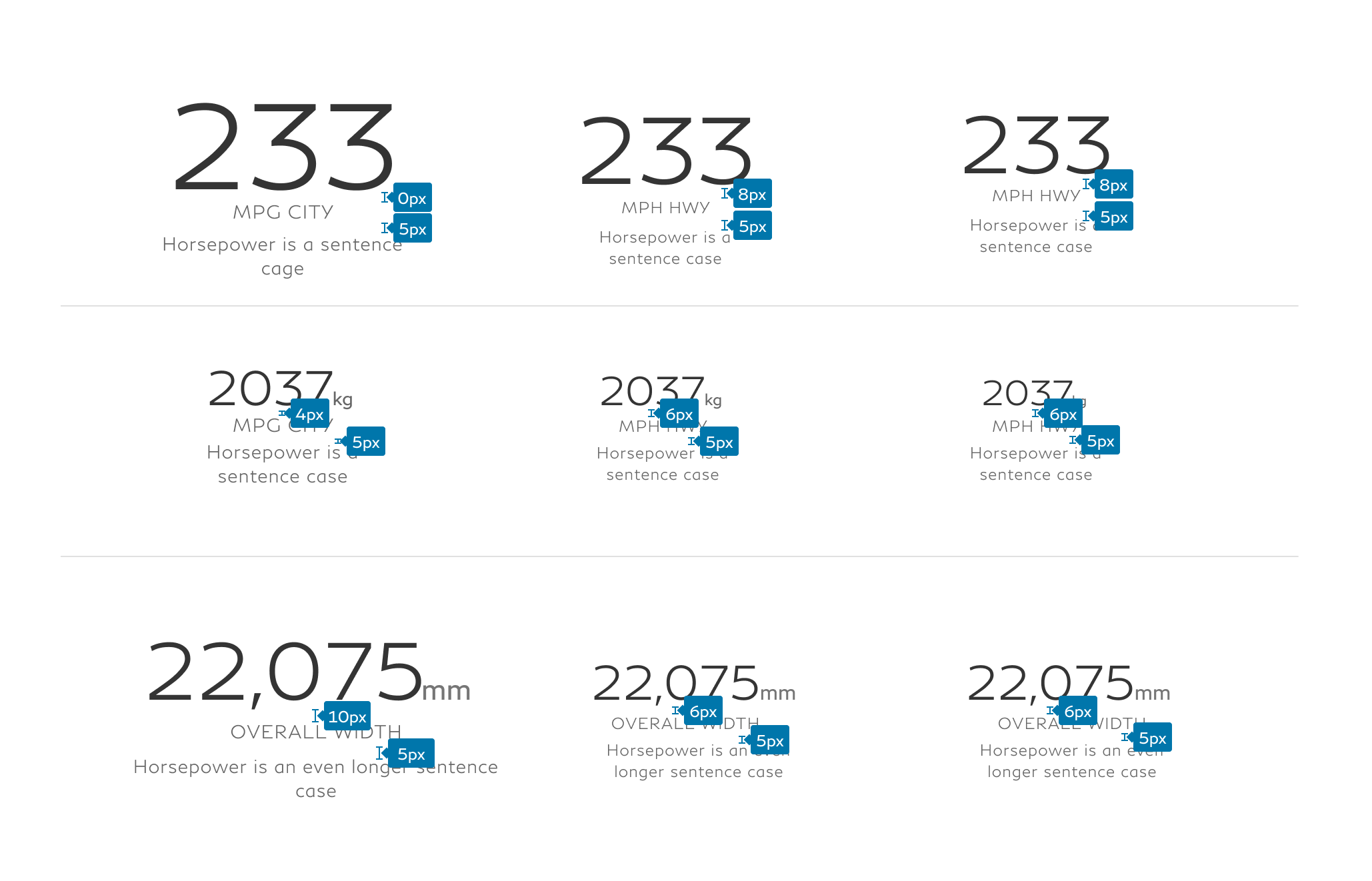
After the sign off, I created sets of visual designs covering all scenarios and layouts.
Below are some of the designed components.
Design Facilitation
Touchpoints - Dev team + QA team

After signoff from the stakeholders, I produced handoffs for the Dev and QA teams.
Since, we were focused on a lean approach, I tried to keep my initial specification sheets as simple as possible and fleshed it out as necessary.
The developers and QA team would highlight any critical needs and I would work them out during the dev cycle itself.
Creative QA
Touchpoints - Dev team + QA team

I was assigned multiple tickets during functional QA which I worked out in close collaboration with the developers usually on the calls themselves.
After functional QA, I completed the final rounds of creative QA and the feature were then signed off for Demos.
Documentation
Touchpoints - Project managers + BAs

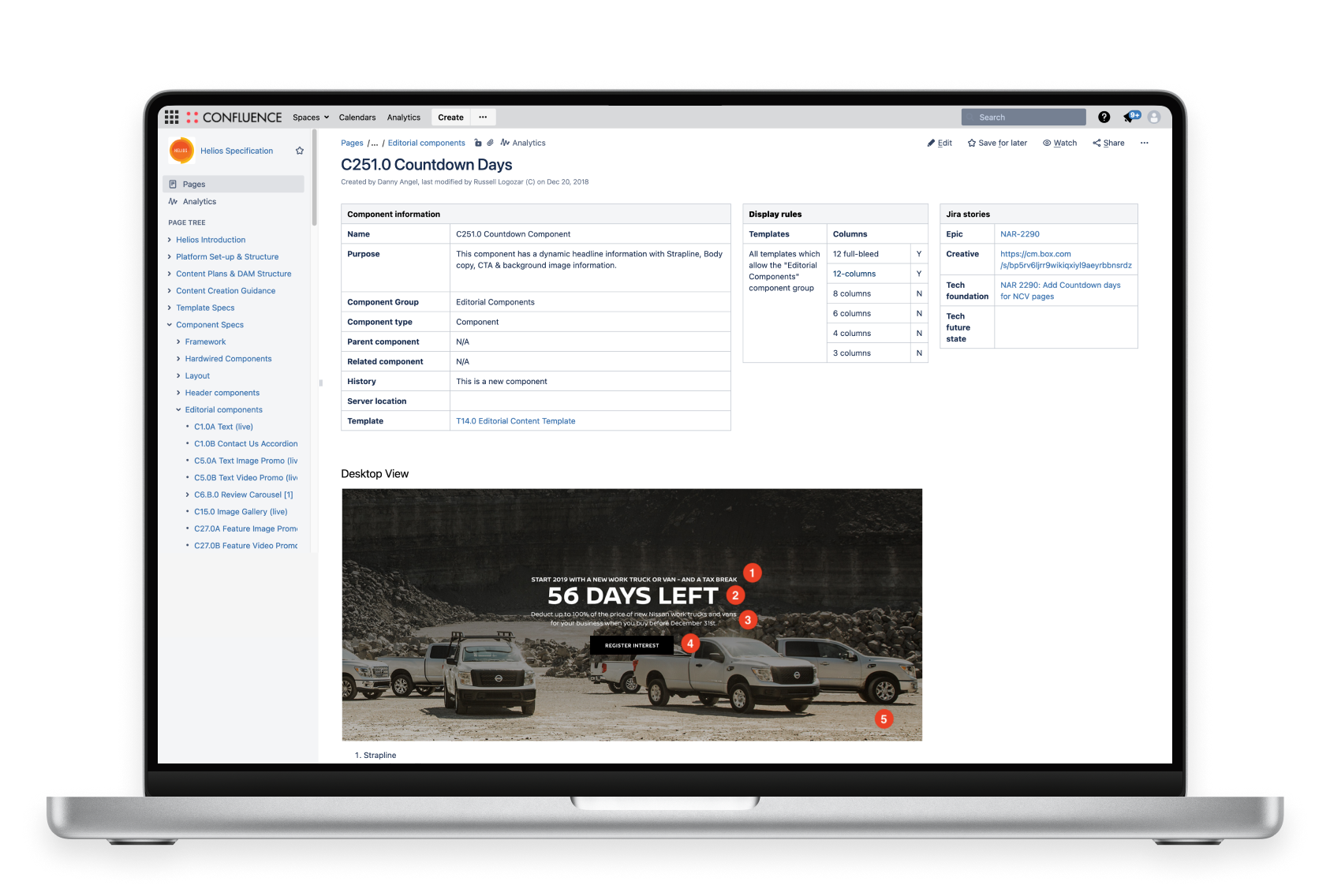
Post release I wrote extensive design documentation on Confluence for the components making sure the Infiniti Docs were at par with their Nissan counterparts.
Outcomes
We eventually managed to design, develop and deliver 15 components during the entirety of this project. The Countdown clock, Car model selector, Test drive booking, Dealer selector and Offers hub to name a few.|

Some components such as the Mexico finance calculator reported over 35% increase in engagement post release.


Some of my main highlights were;

Extensive collaboration with different functions and management of extremely varied tasks simultaneously
Took complete custody of the Design process.
Got a lot of experience using Adobe Experience Manager which helped a lot further in the Account.

Disclaimer : All intellectual property showcased in this Case Study, including but not limited to designs, data, and research findings, are the property of Nissan 2022 and are reproduced here with permission. This Case Study is intended for educational purposes only and does not imply endorsement or partnership with any other entity.